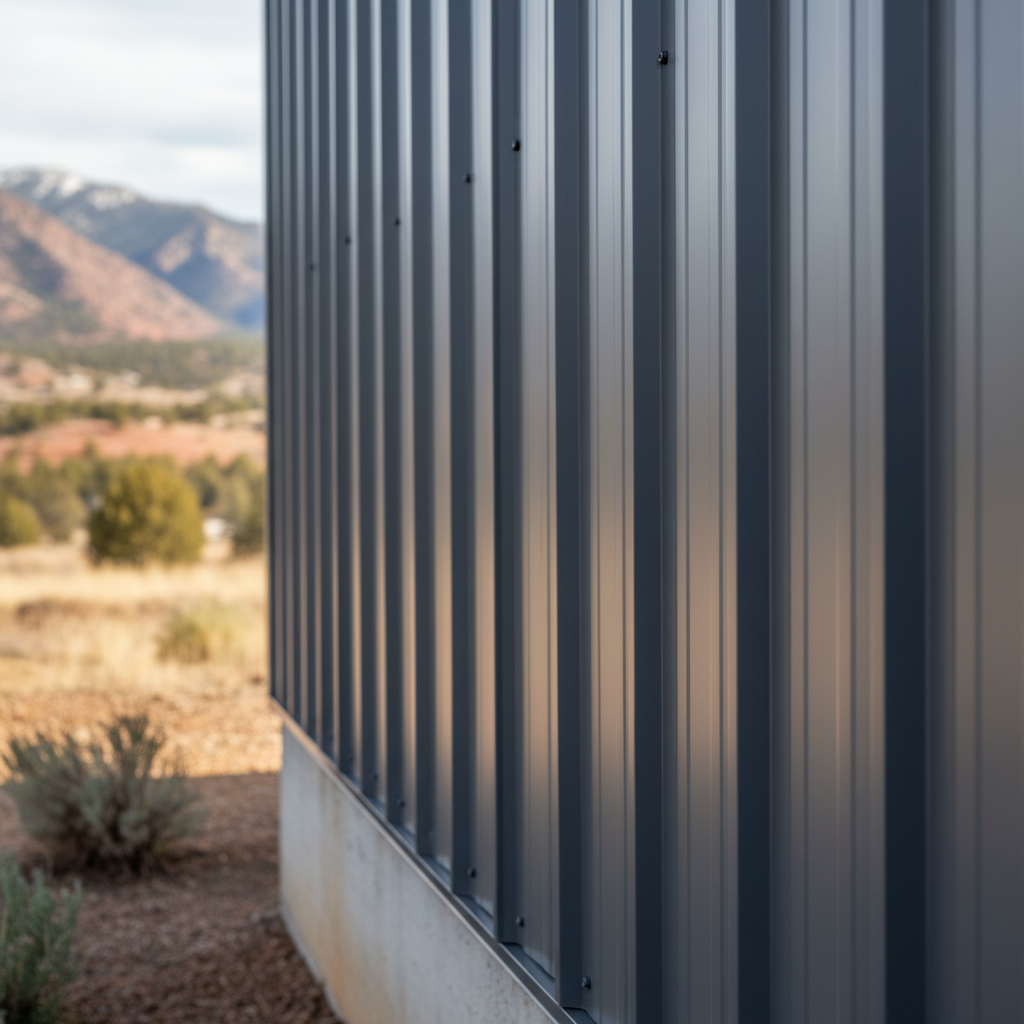
Alright, let's talk metal siding. I get a lot of questions about it, and honestly, it's no surprise. It's a fantastic option for so many homes right here in Ogden, but there's also a ton of bad information floating around. So, I figured I'd just lay out the real deal, answering the questions I hear most often. No marketing fluff here, just what I've seen working with homeowners in our valley.
Is metal siding really more expensive than vinyl or fiber cement?
This is probably the number one question I get, and it’s a fair one. The quick answer? Yes, typically it costs more upfront than vinyl. Often, it's a bit more than fiber cement too. You're looking at higher material costs for the metal panels themselves, and the installation can be a little more specialized. But that's not the whole story, not by a long shot. When you start thinking about the lifetime cost, metal suddenly looks a lot more competitive—and often cheaper.
Think about it: vinyl can fade, crack, and get brittle, especially with our hot summers and cold winters. Fiber cement is tough, sure, but you'll still need to paint it every 10-15 years. Metal? It holds its color, it doesn't crack, and it basically laughs at the elements. So, while the initial sticker price might be higher, you're really buying decades of low-maintenance durability. You won't be calling me for repairs or repainting nearly as often, and that's a big deal.
Will metal siding make my house look like a barn or a commercial building?
This is a common concern, and I totally get it. When most folks think 'metal siding,' they picture corrugated steel on an old farm building or a warehouse. But modern residential metal siding is a whole different ballgame. Manufacturers have come a long way, trust me. You can get metal siding that mimics wood grain, traditional lap siding, vertical panels, even shingles. And the color palettes are huge, ranging from classic neutrals to vibrant, modern tones. We've installed metal siding on homes in the East Bench that look incredibly sleek and contemporary. We've also put it on older bungalows downtown that now have a fresh, updated look without losing their original charm. It's all about choosing the right profile and finish. Honestly, it won't look like a barn unless that's the specific aesthetic you're going for.
How does metal siding hold up to Ogden's weather, especially hail?
This is where metal siding really shines, especially here in Ogden. Our weather can get pretty wild, right? We get those intense summer thunderstorms with pea-sized hail, sometimes even bigger. And our winters? Freezing, thawing, snow, ice. Vinyl can dent, crack, or even shatter under hail impact. Fiber cement is tough, but a really heavy hailstorm can chip it. Metal siding, particularly steel or aluminum, is incredibly resilient. It's designed to withstand impacts. While nothing is absolutely indestructible, metal siding offers superior hail resistance compared to most other materials.
It's also non-combustible, which is a huge plus for fire safety, especially with the dry conditions we sometimes get in the foothills. It won't rot, warp, or attract pests either. It's built to last through everything our Utah weather throws at it.
What about noise? Will rain and hail sound like a drum solo on my house?
Another excellent question, and it's a totally valid concern. If you're picturing a tin roof, you might think it'll be loud. But modern metal siding systems are designed to minimize noise. First off, it's not just a thin sheet of metal nailed directly to your studs. There's typically a sheathing layer, a house wrap, and often an insulation board behind the siding. These layers, combined with how the panels are installed and fastened, create a buffer. Plus, the metal itself is often thicker gauge than you might imagine. In my experience, once it's properly installed, the noise from rain or even light hail isn't significantly louder than with other siding materials. Heavy hail will make some noise, sure, but it's usually not the deafening racket people imagine. Good insulation behind the siding helps a lot too.
Does metal siding rust or corrode?
This is a common misconception. Modern residential metal siding, whether it's steel or aluminum, is treated to prevent rust and corrosion. Steel siding is typically galvanized—that means it's coated with zinc—and then often has multiple layers of primer and a baked-on paint finish. This creates a highly durable, rust-resistant surface. Aluminum siding is naturally resistant to rust because aluminum doesn't contain iron. It can oxidize, but that forms a protective layer rather than destructive rust. Here in Ogden, we don't have the saltwater exposure that coastal areas do, which can speed up corrosion. So, with proper installation and the quality materials we use at Oasis Siding Solutions, you won't be dealing with rust issues on your home.
Is metal siding environmentally friendly?
Absolutely, it's one of its big selling points. Metal siding, especially steel and aluminum, is highly recyclable. If your siding ever needs to be replaced decades down the line, the old material can be recycled instead of ending up in a landfill. Many metal siding products also contain a significant percentage of recycled content to begin with. Beyond that, its incredible durability means it doesn't need to be replaced as often, which reduces waste over the long term. And because it's a non-porous material, it doesn't absorb moisture or support mold growth, helping create a healthier home environment. It's a smart choice if you're looking to make your home more sustainable.
How long does metal siding last?
This is where metal truly shines. You're looking at a lifespan that often exceeds 40-50 years, and sometimes even longer, with proper installation and minimal maintenance. Compare that to vinyl, which might last 20-30 years before it starts looking tired and brittle, or even fiber cement, which is durable but still has a paint cycle. Metal siding's baked-on finishes are incredibly tough and resist fading, chipping, and peeling for decades. It's a long-term investment that really pays off in terms of durability and low upkeep. You put it on, and you pretty much forget about it, except for maybe a periodic wash down to keep it looking fresh. That's a huge relief, especially when you're talking about protecting your biggest asset.